
Hurt on the job at the port, on a job site, in a hospital, or in a Wilmington kitchen? Medical care, wage checks, and a fair rating are yours under North Carolina law, but only if the deadlines are met and the insurer is held to the rules. Free consultation, no fee unless we win.
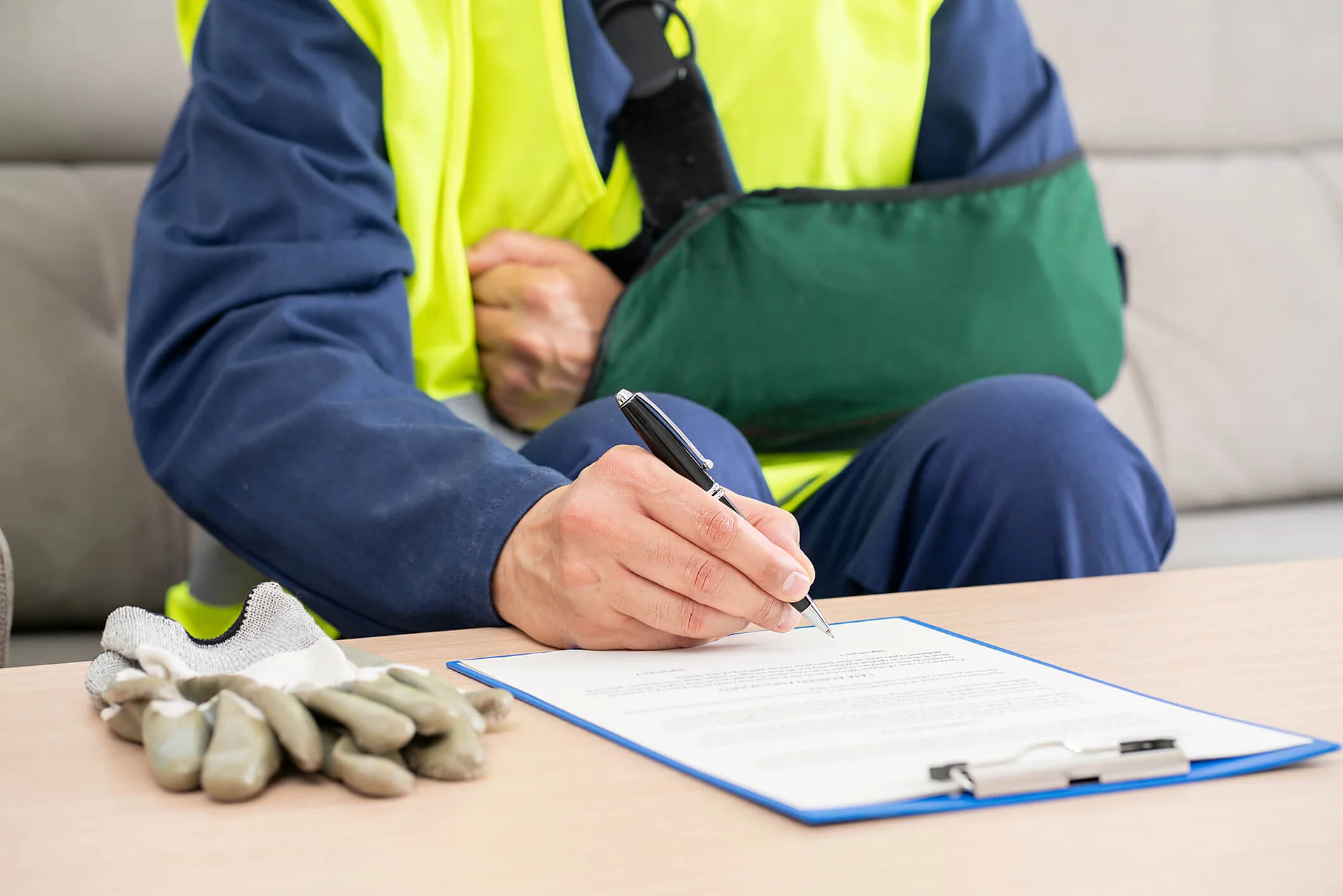
Wilmington works with its hands. The Port of Wilmington moves containers and bulk cargo around the clock, the construction cranes along the riverfront and out toward Carolina Beach Road never seem to come down, Novant Health New Hanover Regional Medical Center never closes, and the restaurants and hotels of the downtown and beach economy run on cooks, servers, and housekeepers. Every one of those jobs produces workplace injuries: crushed hands at the port, falls on job sites, lifting injuries in patient care, burns in kitchens.
North Carolina workers’ compensation is supposed to make those injuries simple. It is a no-fault system: if you were hurt by an accident at work, your employer’s insurer owes you medical care and a share of your lost wages whether or not anyone was careless. In practice the insurer controls which doctor you see, decides when your checks start and stop, and assigns the rating that determines what a permanent injury is worth. Joshua E. Palmer, Attorney at Law represents injured workers in Wilmington and throughout New Hanover County; Attorney Palmer trained in North Carolina law at North Carolina Central University School of Law. This page covers the claim process, the benefits, and the Wilmington specifics, and our North Carolina workers’ compensation lawyer page covers the statewide law in depth.
| County | New Hanover County |
|---|---|
| Where a lawsuit is filed | Workers’ comp claims are not filed in court; they go to the North Carolina Industrial Commission in Raleigh. A separate third-party injury lawsuit (for example, against a driver who hit you on the job) is filed at the New Hanover County Courthouse, 316 Princess St, Wilmington, in Superior Court for claims over $25,000. |
| Crash report (DMV-349) | A workplace injury is reported in writing to your employer within 30 days; the employer files Form 19 with the Industrial Commission and you file Form 18. If the injury was a crash while working, the Wilmington Police Department or the NC State Highway Patrol (I-40, US-17, US-74/76) files the DMV-349 that supports the third-party claim. |
| Emergency and trauma care | Novant Health New Hanover Regional Medical Center, 2131 S 17th St, the region’s Level II trauma center and the emergency department for serious workplace injuries in Wilmington; the insurer may direct follow-up care to an occupational medicine clinic. |
| Roads where crashes concentrate | For on-the-job driving injuries: I-40 at its eastern terminus, US-17, US-74/76, US-421, Market Street, College Road (NC-132), Carolina Beach Road, and Oleander Drive, plus the truck routes serving the Port of Wilmington. |
| Industrial Commission forms | Form 18 opens your claim (file within 2 years); Form 19 is the employer’s report; Form 60/63/61 is the insurer’s acceptance, payment without admission, or denial; Form 33 requests a hearing before a deputy commissioner, generally scheduled in or near the county where the injury happened. |
Details current as of October 2026; confirm the courthouse and records office before you file or request anything in person.
Tell your employer in writing right away. North Carolina requires written notice of the accident to the employer within 30 days under N.C. Gen. Stat. § 97-22; miss it and the insurer can refuse medical bills and back benefits unless you show a reasonable excuse or prove the employer already knew. A short email or text to your supervisor naming the date, the place, and what happened satisfies the rule and creates the record you will need.
Get medical care and tell every provider the injury happened at work so it is documented as work-related from the first visit, whether that is the emergency department at New Hanover Regional or the clinic the insurer sends you to afterward. Your employer is supposed to file a Form 19 with the Industrial Commission, but that does not open a claim in your name. To protect your claim, file your own Form 18 with the Industrial Commission; you have two years from the date of injury under N.C. Gen. Stat. § 97-24.
Two things above all: medical treatment and lost-wage benefits. The employer’s insurer must pay in full for all treatment reasonably required to cure or relieve the effects of the injury under N.C. Gen. Stat. § 97-25, including surgery, physical therapy, prescriptions, and mileage to appointments, for as long as the treatment relates to the injury. The trade-off is that the insurer generally directs your care and picks the treating physician; changing doctors usually requires the insurer’s agreement or an Industrial Commission order, and a lawyer can help you get one.
If the injury keeps you out of work, temporary total disability pays 66 2/3% of your average weekly wage under N.C. Gen. Stat. § 97-29, capped at a maximum the state resets every January: $1,446 per week for 2026 injuries, with a $30 weekly minimum. Your average weekly wage is calculated under N.C. Gen. Stat. § 97-2, typically from the 52 weeks before the injury, and an error in that one number reduces every check for the life of the claim. Checks begin after a seven-day waiting period under N.C. Gen. Stat. § 97-28; if the disability lasts more than 21 days, those first seven days are paid back. Once the insurer accepts the claim, N.C. Gen. Stat. § 97-18 requires benefits to be paid promptly, with penalties for late payment.
| Benefit | What it pays | Key rule |
|---|---|---|
| Medical treatment | All reasonably required care, prescriptions, and mileage, paid in full | Insurer generally directs care; changes need approval (N.C. Gen. Stat. § 97-25) |
| Temporary total disability | 66 2/3% of average weekly wage, max $1,446/week for 2026 injuries | 7-day waiting period; up to 500 weeks (N.C. Gen. Stat. § 97-29) |
| Temporary partial disability | 66 2/3% of the difference between pre-injury and reduced wages | For light-duty or reduced-hours return to work |
| Permanent partial disability | Weeks of benefits from the body-part schedule times your impairment rating | The rating is the fight; second opinions are allowed (N.C. Gen. Stat. § 97-31) |
| Permanent total disability | Ongoing weekly benefits for the most serious injuries | Loss of both hands, arms, feet, legs, eyes, severe brain injury, and similar |
| Death benefits | Weekly benefits to dependents plus burial expenses | Claim belongs to the surviving dependents |
The maximum weekly rate is set annually by the North Carolina Industrial Commission and applies based on the year of injury.
Every North Carolina workers’ comp claim runs through the Industrial Commission rather than the New Hanover County courts. Your Form 18 opens the claim. The insurer accepts it (Form 60), pays without admitting liability (Form 63), or denies it (Form 61), and a denial is the beginning of the case, not the end. To contest a denial, a cut-off of benefits, or a refusal to authorize treatment, you file a Form 33 request for hearing under N.C. Gen. Stat. § 97-83.
The case then goes to mandatory mediation, where most disputes settle, and if not, to a hearing before a deputy commissioner, which works much like a trial with testimony and medical evidence. Hearings are generally scheduled in or near the county where the injury occurred. Either side can appeal to the Full Commission and from there to the North Carolina Court of Appeals.
Not to the comp claim itself. Workers’ compensation is no-fault: your own carelessness does not reduce or bar your medical care or wage benefits. The Act has its own narrow forfeitures instead, for injuries caused by the employee’s intoxication or willful intent to injure, and the insurer must prove them. A positive drug test is not the end of the claim; the insurer has to show the intoxication caused the injury.
Contributory negligence does apply to any separate third-party claim, and that is where it matters in Wilmington. Under North Carolina’s pure contributory negligence rule, if a defendant proves you were even 1% at fault, a personal injury claim can be barred entirely; insurers call it the “1% rule” as informal shorthand, and the defense must plead and prove it under N.C. Gen. Stat. § 1-139. A recorded statement given in the comp claim, or a form answer about how the accident happened, can be used to defeat the third-party case, which is why the two claims should be handled by the same lawyer. Our contributory negligence guide covers the rule and its exceptions.
Generally you cannot sue your employer. Workers’ compensation is the exclusive remedy against an employer that carries coverage under N.C. Gen. Stat. § 97-10.1; that is the bargain behind the no-fault system, with a narrow exception for an employer that intentionally engages in conduct it knows is substantially certain to cause serious injury or death.
Far more common in Wilmington is a third-party claim against someone other than your employer whose negligence caused the injury: the driver who hit you on College Road while you were making deliveries, a subcontractor on a job site, a trucking company at the port, or the manufacturer of a defective piece of equipment. A third-party claim is a full personal injury case, with pain and suffering and the full measure of lost wages rather than the two-thirds comp pays, and it must be filed within three years under N.C. Gen. Stat. § 1-52(16) in New Hanover County Superior Court. It runs alongside the comp claim, with the comp insurer reimbursed from the recovery. Our North Carolina car accident lawyer page explains how the driver claim works.
Four numbers set the value of a Wilmington workers’ compensation claim: your average weekly wage, how long you are out of work, the cost of treatment, and, for a lasting injury, the permanent impairment rating your doctor assigns once you reach maximum medical improvement. North Carolina pays permanent partial disability from the body-part schedule in N.C. Gen. Stat. § 97-31: each body part carries a number of weeks, multiplied by your rating percentage. A rating from an insurer-chosen doctor is often lower than the injury deserves; you have the right to a second-opinion rating from a doctor of your choosing, and that single step frequently changes the value of a Wilmington claim.
Many claims resolve through a lump-sum settlement known in North Carolina as a clincher agreement, which closes the claim, including future medical care, in exchange for one payment. Every clincher must be approved by the Industrial Commission as fair, but the Commission does not negotiate for you. Once approved, the settlement is final, so future surgery, wage loss, and any Medicare set-aside must be priced first.
North Carolina employers with three or more employees must carry workers’ compensation insurance, and the label on your paycheck does not decide whether you are covered. The Industrial Commission looks at the real working relationship: who controls the work, who provides the tools, whether you can be fired, whether you work for others. Workers misclassified as independent contractors win coverage regularly, a frequent fight on Wilmington construction sites and in restaurant kitchens. If the employer truly has no insurance, the Commission can still order benefits paid, and on a construction site there may be coverage through a general contractor higher up the chain.
Because the insurer already has a lawyer. Workers’ compensation attorney fees in North Carolina are contingent, a percentage of the benefits recovered, and must be approved by the Industrial Commission as reasonable. Joshua E. Palmer, Attorney at Law offers a free consultation, advances the costs of records, depositions, and expert opinions, and takes no attorney’s fee unless we recover benefits for you. Attorney Palmer trained in North Carolina law and concentrates in injury claims; we handle the insurer, the Industrial Commission filings, the ratings fight, and, when a third party caused the injury, the personal injury case alongside it.
We serve Wilmington clients by phone, video, and in person by appointment. Outcomes from earlier matters are collected on our case results page (every case is different, and prior results do not guarantee a similar outcome), and what clients say about the firm is on our testimonials page.

Joshua E. Palmer
Managing Partner · Joshua E. Palmer, Attorney at Law
Attorney Palmer concentrates in personal injury law — car, truck, and motorcycle crashes, wrongful death, workplace injuries, and premises injuries — and personally handles the insurance fight that decides a North Carolina claim. He trained in North Carolina law at North Carolina Central University School of Law in Durham and represents clients throughout New Hanover County.
Hurt on the job in Wilmington or anywhere in New Hanover County? Call for a free, no-obligation case review. We will explain what benefits you should be receiving under North Carolina law, whether a third-party claim exists, and what to do next.
Responsible attorney: Joshua E. Palmer, Managing Partner · 106 Moran Dr #5106, Bonaire, GA 31005 · (478) 887-3734. Attorney advertising. This page is general legal information about North Carolina law, not legal advice for your situation; contacting the firm does not create an attorney-client relationship.
The insurer already has a lawyer. One free conversation puts one on your side, and you pay nothing unless we recover benefits for you.
Each case is different. Any results, settlement figures, or benefit amounts described on this page depend on the specific facts of that case and do not guarantee or predict a similar outcome in yours. Statutes and benefit rates cited are current as of October 2026; confirm current law with an attorney before relying on it.
📞 Get A Free Consultation · (478) 887-3734