
Every reportable wreck in North Carolina produces one document, the DMV-349, and everything that follows runs through it. Here is where your copy is, how to get it, what it costs, and why it matters more here than in almost any other state.
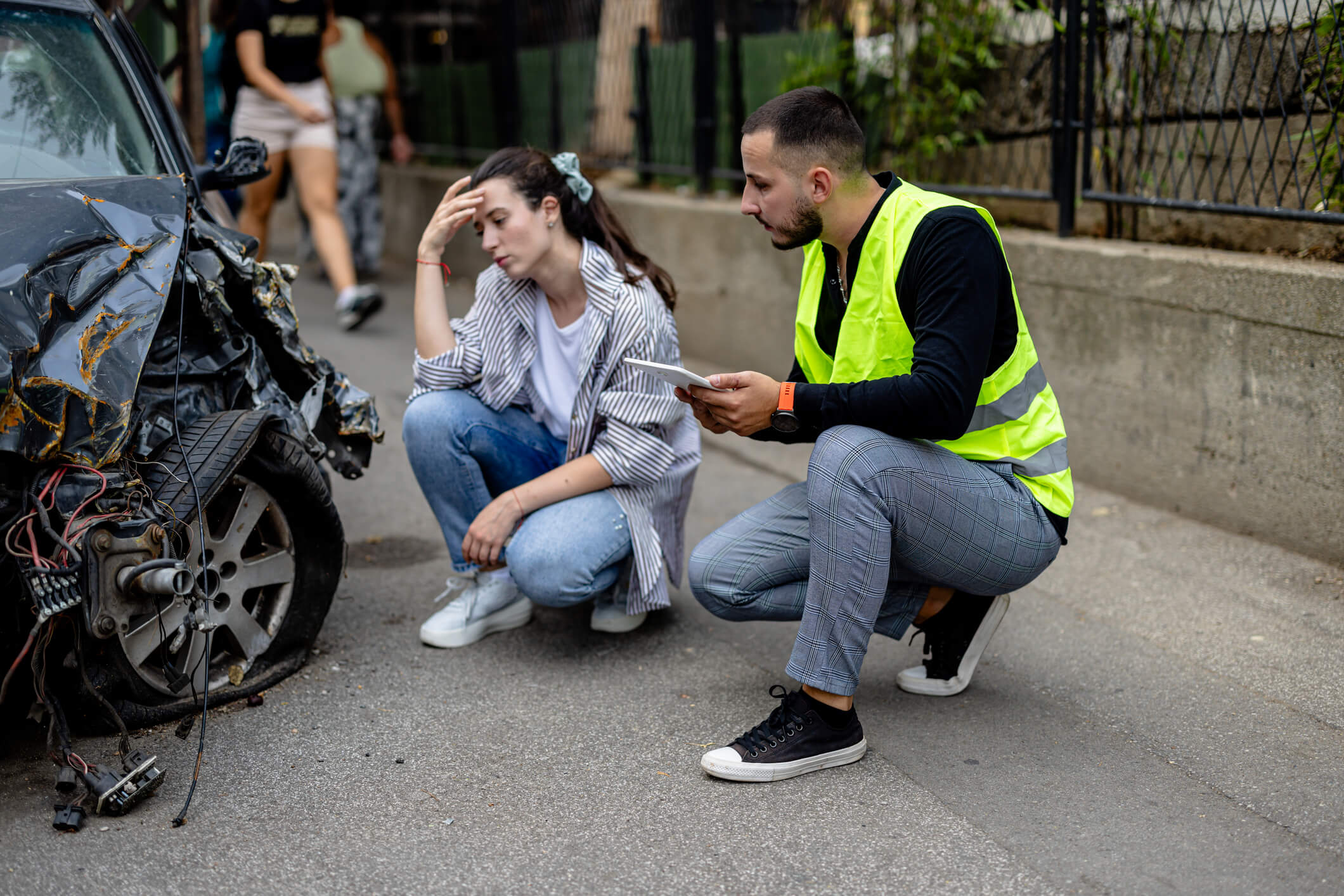
The first search most people make after a North Carolina wreck is not “lawyer.” It is “how do I get my accident report.” The adjuster wants it, the body shop wants the report number, and you want to know what the officer wrote about how it happened. This guide answers that question for the whole state: what the report is, who has it, the two ways to get a copy, what it costs, and what to do with it once it is in your hands.
Two routes exist, and people mix them up. The agency that investigated (the city police department, the county sheriff, or the State Highway Patrol) can give you a copy quickly, often through an online portal and often for nothing. The North Carolina Division of Motor Vehicles gives you a certified copy, which is the version a court accepts, for a small fee and a printed form. Which one you need depends on who is asking for it, and this page tells you.
Joshua E. Palmer, Attorney at Law handles injury claims across North Carolina; Attorney Palmer trained in North Carolina law at North Carolina Central University School of Law in Durham. The mistake we see most often is a driver who assumed the report settled the question of fault. It does not, and under North Carolina’s contributory negligence rule that assumption can cost a claim.
A North Carolina crash report is the written report a law enforcement officer must prepare after investigating a reportable crash, on the form the Division of Motor Vehicles prescribes: the DMV-349. People call it the accident report, the police report, or the wreck report. It is the same document, and on it the officer records the date, time and location, every vehicle and person involved, the insurance information, the estimated damage, a diagram, a narrative of what the officer concluded happened, and any citations issued.
Not every fender-bender produces one. Under N.C. Gen. Stat. § 20-4.01(33b), a “reportable crash” is one involving a motor vehicle that results in death or injury to a person, or total property damage of $1,000 or more (or any damage to a vehicle seized under the impaired-driving forfeiture law). Under N.C. Gen. Stat. § 20-166.1(a), the driver in a reportable crash must “immediately, by the quickest means of communication” notify the appropriate law enforcement agency, and under subsection (e) that agency “must investigate a reportable accident.” That investigation is where the DMV-349 comes from.
The form carries its own warning in the header, and it is worth quoting in full: “THIS REPORT IS FOR THE USE OF THE DIVISION OF MOTOR VEHICLES. THE DATA IS COLLECTED FOR STATISTICAL ANALYSIS AND SUBSEQUENT HIGHWAY SAFETY PROGRAMMING. DETERMINATIONS OF ‘FAULT’ ARE THE RESPONSIBILITY OF INSURERS OR OF THE STATE’S COURTS.” The officer’s report is evidence of what the officer observed and concluded. It is not a ruling on who caused the crash, a point our page on what to do when the crash report blames you explains in depth.
The investigating officer writes it. Section 20-166.1(e) requires the officer who investigates a reportable crash, “whether at the scene of the accident or by subsequent investigations and interviews,” to “make a written report of the accident within 24 hours” and to include information on the insurance (financial responsibility) of the driver the officer identified as at fault. Where the report goes next depends on the uniform. A State Highway Patrol trooper forwards the report directly to the Division of Motor Vehicles. A city or county officer forwards it to the local agency for the area where the crash happened, and that agency “must forward it to the Division within 10 days after receiving the report.”
That routing explains where your copy lives. For a few days the only copy is at the investigating agency, which is why the fastest source is always the police department, sheriff’s office, or the Patrol’s own search system. Once the report reaches Raleigh, NCDMV can issue the certified copy. If the crash happened inside a city or town, the appropriate agency under § 20-166.1(a) is that city’s police department; if it happened outside a city or town, it is the State Highway Patrol or the county sheriff’s office. Our Highway Patrol crash report page covers the Patrol’s system, which holds every crash the Patrol has investigated since May 16, 2013.
One more report can follow the first: if a person injured in the crash dies within 12 months and the death was not in the original report, the officer must file a supplemental report. Families dealing with a fatal wreck can start with our North Carolina wrongful death lawyer page.
There are two routes, and the right one depends on what you need the copy for.
| You need it for | Get it from | Cost and timing | Notes |
|---|---|---|---|
| Your own insurance claim or the other driver’s insurer | The investigating agency (portal or records counter) | Free to a small convenience fee; typically a few business days after the crash | The report number, your driver exchange form and photo ID speed things up |
| A lawyer reviewing the claim | Either route; the agency copy is usually enough to start | As above | Attorneys’ offices licensed in North Carolina can request an unredacted copy from NCDMV with a DPPA permissible use |
| A lawsuit, a court hearing or an official proceeding | NCDMV certified copy (TR-67A) | $6.50 per certified copy; by mail allow 10 business days from receipt | Admissible without further certification under § 20-42(b) |
| A crash the Highway Patrol or a sheriff investigated | The Patrol’s online collision search, or NCDMV | Reports may take up to 48 hours to enter the Patrol’s system | Certified copies still come from NCDMV |
Individuals ordering from NCDMV receive a redacted copy; federal privacy law limits what the Division can release without a permissible use.
Start with where the crash happened. Inside a city or town, the police department of that city or town investigates and holds the report; outside city limits, it is the State Highway Patrol or the county sheriff’s office. The table below covers the agencies with dedicated pages in this guide. For any other city or county, call that department’s records division, or order the certified NCDMV copy described next.
| Where the crash happened | Agency | Fast route | Guide |
|---|---|---|---|
| Charlotte | Charlotte-Mecklenburg Police Department | LexisNexis BuyCrash online (convenience fee) or in person at 601 E. Trade St. with photo ID | Charlotte crash reports |
| Raleigh | Raleigh Police Department | crash.raleighpd.org (free) or the records counter at 6716 Six Forks Road | Raleigh crash reports |
| Greensboro | Greensboro Police Department | LexisNexis BuyCrash online or the Records Division at 300 W. Washington Street (confirm fee and hours) | Greensboro crash reports |
| Winston-Salem | Winston-Salem Police Department | eCrash database online or Room 130, 725 N. Cherry St. (no charge for a copy) | Winston-Salem crash reports |
| Interstates, state highways and areas outside city limits | North Carolina State Highway Patrol | vehicle-search.ncshp.org collision search (crashes since May 16, 2013) | Highway Patrol crash reports |
| Any other city or county | That city’s police department or the county sheriff | Call the records division, or order the certified copy from NCDMV | See the TR-67A steps below |
Portals and counters change. Every figure above was checked in September 2026; confirm with the records division before you drive over.
The Division of Motor Vehicles issues certified crash reports through its Order a Crash Report service. The NCDMV page is explicit that “Individuals cannot order a crash report online”; if you were personally involved in the crash you order “in person or by mail” using the Crash Report Request form, the TR-67A. The form is not fillable, so print it. Here is the process, step by step.
The DMV-349 runs two pages plus continuation sheets. Page one identifies the crash and everyone in it: location, each unit and driver, the vehicle and its estimated damage, insurance company and policy number, injuries and where the injured were taken. Page two is the officer’s reconstruction: points of initial contact, the sequence of events for each unit, estimated speeds, road and traffic-control conditions, a diagram, the narrative, witnesses, and any traffic violations charged. Our field-by-field guide to how to read a DMV-349 walks through every block.
Insurers read the narrative, the diagram and the violation block first, and here North Carolina is different from almost every other state. Under North Carolina’s contributory negligence rule, a person who was even 1% at fault for a crash can be barred from recovering anything from the other driver. An officer’s note that you were “following too close” or a diagram that puts you slightly over the center line is not a legal finding, but it is exactly what an adjuster will use to deny the claim. Our North Carolina contributory negligence guide explains the rule and its exceptions; the short version is that what the report says about how the crash happened matters more here than anywhere else.
That is also why a report you disagree with should not be left alone. The officer can correct or supplement a report when shown evidence, and the adjuster’s file should contain your version, your photos and your witnesses, not just the officer’s. The page on what to do when the crash report blames you covers how to approach the agency, what evidence to gather, and what to say to the insurer in the meantime.
Several clocks start running the moment the vehicles stop, and the crash report is tied to most of them. The driver must notify law enforcement immediately under § 20-166.1(a). A driver who hits a parked or unattended vehicle must report the collision to its owner within 48 hours under § 20-166.1(c), whether or not the crash was reportable. The officer’s written report is due within 24 hours, the local agency forwards it to the Division within 10 days, and the Division needs 10 business days to fill a mailed certified-copy request. Your own auto policy requires prompt notice of the crash, a duty that comes from the policy’s conditions rather than a statute. And under N.C. Gen. Stat. § 1-52(16), a lawsuit for injury must be filed within three years of the crash.
Our page on the deadlines after a North Carolina crash puts every one of them in a single table, including the DMV forms and the insurance-points periods. Note that “failure to report accident where such report is required” carries three driver license points under N.C. Gen. Stat. § 20-16(c).
A crash by itself adds no driver license points. Points under § 20-16(c) are assessed on convictions, so a citation written in the violation block of the DMV-349 is what leads to points, not the crash or the report. An at-fault crash can, however, add insurance points under the Safe Driver Incentive Plan, which is a separate system with its own tiers based on the damage and injuries involved. Our North Carolina DMV points guide lays out both schedules, the 12-points-in-three-years suspension threshold, and the difference between DMV points and insurance points.
Because the crash report is the first exhibit in the case, and the claim is won or lost on the evidence that surrounds it. We obtain the agency copy and, when the case needs it, the certified NCDMV copy; we compare the officer’s narrative with the physical evidence, the vehicle damage and the witnesses; we approach the investigating agency about corrections when the report is wrong; and we handle the adjuster’s questions so that nothing you say is turned into a contributory negligence argument. When an insurer will not pay what a case is worth, we file suit within the deadline and let the evidence decide.
The consultation is free and there is no fee unless we win. For the practice-specific picture, see our pages for a North Carolina car accident lawyer, a North Carolina truck accident lawyer and a North Carolina motorcycle accident lawyer.

Joshua E. Palmer
Managing Partner · Joshua E. Palmer, Attorney at Law
Attorney Palmer concentrates in personal injury law and trained in North Carolina law at North Carolina Central University School of Law in Durham. Contributory negligence is the defense he prepares every North Carolina case to defeat, from the first call with an adjuster to the courtroom.
Have your crash report and not sure what it means for your claim? Call for a free review. We will read the report with you, explain the North Carolina rules that apply, and tell you honestly where the case stands.
Responsible attorney: Joshua E. Palmer, Managing Partner · 106 Moran Dr #5106, Bonaire, GA 31005 · (478) 887-3734. Attorney advertising. This page is general legal information about North Carolina law, not legal advice for your situation; contacting the firm does not create an attorney-client relationship.
One free conversation will tell you what the officer’s narrative means for your claim under North Carolina law, what needs correcting, and what to do next. No fee unless we win.
Each case is different. Any results, settlement figures, or benefit amounts described on this page depend on the specific facts of that case and do not guarantee or predict a similar outcome in yours. Statutes and benefit rates cited are current as of November 2026; confirm current law with an attorney before relying on it.
📞 Get A Free Consultation · (478) 887-3734