
A car pulled out of a Skibo Road driveway, or drifted into your lane on I-295, and now the adjuster says you were going too fast. In North Carolina, 1% of the blame can erase your claim. Free consultation, no fee unless we win.
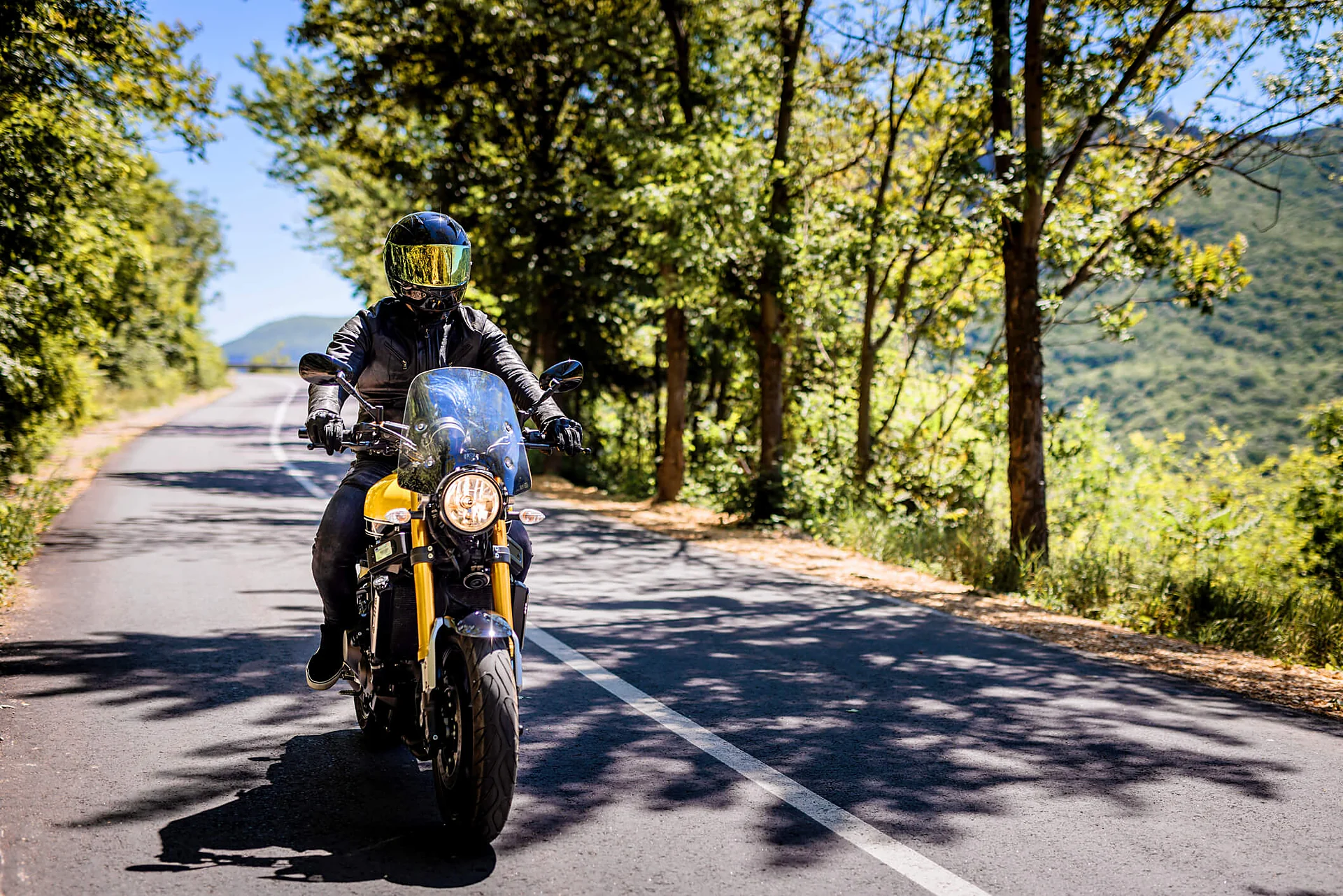
Riders in Fayetteville share the road with a lot of traffic. I-95 brings interstate freight along the east side, I-295 circles the rest of the city, and Bragg Boulevard, Skibo Road, Raeford Road, and Ramsey Street fill with commuters every day. A motorcycle is easy to miss in all of it. When a driver turns across a rider’s path, the rider has no frame around them, and the injuries are severe.
Then the insurer tells its version: the rider was speeding, weaving, or came from nowhere. Most states let that story trim a claim. North Carolina is one of only four states, plus Washington, D.C., that still bars the claim entirely. Joshua E. Palmer, Attorney at Law represents injured riders in Fayetteville; Attorney Palmer trained in North Carolina law at North Carolina Central University School of Law in Durham. The law in full is on our North Carolina motorcycle accident lawyer page. This page covers how it plays out here in Cumberland County.
| County | Cumberland County |
|---|---|
| Where a lawsuit is filed | Judge E. Maurice Braswell Cumberland County Courthouse, 117 Dick St, Fayetteville. Motorcycle injury lawsuits over $25,000 are filed in Cumberland County Superior Court; smaller claims go to District Court. |
| Crash report (DMV-349) | Fayetteville Police Department for crashes inside the city; the NC State Highway Patrol for I-95, I-295, and roads outside city limits; military police for crashes on Fort Bragg. Certified copies of the DMV-349 come from NCDMV. |
| Emergency and trauma care | Cape Fear Valley Medical Center, a Level III trauma center; Womack Army Medical Center on Fort Bragg for eligible service members and families. The most severe rider injuries may be transferred to a higher-level trauma center. |
| Roads where crashes concentrate | I-95, I-295 (the Fayetteville Outer Loop), US-401, US-301, Bragg Boulevard, Skibo Road, Raeford Road, Ramsey Street, and the All American Freeway. |
| Keep your gear | Your helmet, jacket, gloves, and boots show the force of the impact. Store them as they are, and leave the motorcycle unrepaired until it has been photographed and inspected. |
Details current as of October 2026; confirm the courthouse and records office before you file or request anything in person.
Three settings produce most of the disputes. The first is the commercial strip. Skibo Road and Raeford Road have shopping-center entrances every few hundred feet, so cars turn left across the rider’s lane or pull out from a driveway. The second is the interstate. On I-95 and I-295, a driver changes lanes into the space a bike occupies, or a rider is rear-ended in slowing traffic. The third is the signalized corridor, such as Bragg Boulevard and Ramsey Street, where the argument is over the light.
Each setting needs its own proof. A strip-mall camera may record over its footage within days. A lane-change crash on the interstate may involve a truck whose records sit with a carrier out of state. At a signal, the timing and the witnesses decide it. The driver will say the rider was not visible, and the evidence has to answer that.
What beats the “rider was speeding” story? Facts that exist apart from anyone’s memory. Event data from the car can show its speed and braking. Skid marks and the final rest positions help show how fast the bike was moving. Footage from a nearby business can show the bike’s lane position and the driver’s turn. Independent witnesses add a voice the adjuster cannot easily dismiss. We chase all of it in the first days, before it is erased or repaired away.
Call 911 and stay if you can. An officer will file the DMV-349 crash report, as N.C. Gen. Stat. § 20-166.1 requires for injuries. Fayetteville police write it in town, the Highway Patrol on the interstates, and military police on post. Ask for the report number. Then get checked the same day. Cape Fear Valley Medical Center is the local trauma center, and rider injuries like a cracked vertebra or a brain bleed can stay hidden behind adrenaline for hours.
Photograph the driver’s position, the bike, skid marks, and debris before anything moves. Collect the driver’s license, plate, and insurance details, plus witness phone numbers. Do not repair anything. Then speak with a lawyer before the other insurer calls. That call is recorded for a reason, and the adjuster is listening for one admission.
North Carolina has a universal helmet law. Every rider and passenger must wear a helmet meeting the federal FMVSS 218 standard, under N.C. Gen. Stat. § 20-140.4. Yet that statute also says a helmet violation is neither negligence per se nor contributory negligence per se in a civil case. Put simply, going without a helmet cannot by itself bar or shrink your claim. The question is still who caused the crash.
A helmet matters in other ways. Wearing one takes away the insurer’s argument about your head injuries. A cracked shell is also proof of how hard you were hit. Lane splitting is a separate issue, because North Carolina does not authorize it. If it played a part in your crash, expect the insurer to raise it. That does not automatically end a claim, and a lawyer can weigh the facts with you.
Under pure contributory negligence, a rider who shares any fault recovers nothing. Adjusters call this the “1% rule,” an informal label. The statute simply makes fault a defense the other side must plead and prove under N.C. Gen. Stat. § 1-139. For motorcyclists the danger is bias. Many adjusters assume riders are reckless, so the rule can do the insurer’s work before any evidence is read.
Several doctrines keep rider claims alive. Last clear chance applies when the driver had the final opportunity to avoid the wreck, as in a left turn made after the bike was plainly visible. Gross negligence or willful and wanton conduct, like drunk driving, defeats the defense altogether. Our contributory negligence guide walks through each exception.
| Rule | North Carolina law | What it means for a Fayetteville rider |
|---|---|---|
| Helmet law | Universal, N.C. Gen. Stat. § 20-140.4 | Required, yet a violation is not contributory negligence per se |
| Fault rule | Pure contributory negligence, N.C. Gen. Stat. § 1-139 | Proven fault of any size can bar recovery; the defense must prove it |
| Injury lawsuit deadline | 3 years, N.C. Gen. Stat. § 1-52(16) | File in Cumberland County Superior Court within 3 years of the wreck |
| Wrongful death deadline | 2 years, N.C. Gen. Stat. § 1-53(4) | Counted from the date of death |
| Minimum liability insurance | $50k / $100k / $50k, N.C. Gen. Stat. § 20-279.21 | Serious rider injuries pass that fast, so UM/UIM matters |
Deadlines differ for claims against government entities and for minors. Talk to a lawyer about your specific dates.
Start with the at-fault driver’s liability policy. A policy issued or renewed on or after July 1, 2025, must offer at least $50,000 per person and $100,000 per accident in bodily injury coverage under N.C. Gen. Stat. § 20-279.21. Uninsured and underinsured motorist coverage must match. An older policy keeps the 30/60/25 limits until it renews. Fractures, spinal injuries, and grafts for road rash can use up a minimum policy in a single hospital stay.
So your own coverage often decides the outcome. UM/UIM on your motorcycle policy, or on a car policy in your household, picks up what the driver’s policy cannot. Report a hit-and-run to police promptly, and it is handled as an uninsured-driver claim. If the driver was on the job, the employer’s policy may apply. Soldiers hurt off post may also face a TRICARE reimbursement claim, which we coordinate.
Here is how the layers fit when the driver carries only a 50/100 minimum. The driver’s insurer pays up to its per-person limit. If your medical bills and losses are larger, your own underinsured motorist coverage can cover the gap, up to its own limit. A second household policy may add more.
The value follows the injury. A North Carolina rider can recover emergency treatment, surgery, rehabilitation, future care, lost pay and earning power, and non-economic damages for pain, scarring, and a changed life. Ordinary injury cases carry no cap on those categories. Punitive damages for conduct like drunk driving are limited to the greater of three times compensatory damages or $250,000 under N.C. Gen. Stat. § 1D-25.
Two things shift the figure. One is whether fault is pinned on the driver. The other is how much coverage is available across every policy. If the insurer thinks contributory negligence will defeat you, expect a low offer. Our settlement guide explains how claims are valued here. Offers that arrive before your surgeries end are usually too small, and accepting one closes the claim.
Timing matters because of maximum medical improvement, or MMI. That is the point where your doctor says you have healed as much as you are going to. Often the doctor then gives an impairment rating, a percentage describing any lasting loss of function. A higher rating usually supports a higher value for permanent harm. Settling before MMI means guessing at your future, and the guess is almost always in the insurer’s favor.
Because rider cases turn on early proof. Attorney Palmer, a North Carolina Central graduate, concentrates on rider, car, and truck injury claims. We order the DMV-349, send preservation letters for video and vehicle data, and speak to the insurer so you do not have to. We also manage medical bills and liens, and bring in a reconstructionist when the driver’s story needs an answer. Every file is built for Cumberland County Superior Court, so the insurer prices it as a trial case. Filing starts with a complaint at the Cumberland County courthouse on Dick Street, delivered to the defendant with a summons. The defense then has time to answer, and the sides trade records and questions under oath. Most claims settle along the way, often once the insurer sees the case is ready for a jury.
Clients in Fayetteville are served by phone, video, and in-person appointments, including hospital and home visits during recovery. The firm’s office is in Bonaire, Georgia, and we represent North Carolina riders statewide. Your first consultation is free. Our Fayetteville personal injury page covers other cases we take in the city.

Joshua E. Palmer
Managing Partner · Joshua E. Palmer, Attorney at Law
Attorney Palmer concentrates in personal injury law — car, truck, and motorcycle crashes, wrongful death, workplace injuries, and premises injuries — and personally handles the insurance fight that decides a North Carolina claim. He trained in North Carolina law at North Carolina Central University School of Law in Durham and represents clients throughout Cumberland County.
Hurt on a motorcycle in Fayetteville or elsewhere in Cumberland County? Call for a free, no-obligation case review. We will explain how North Carolina law applies to your wreck, what your claim may be worth, and what comes next.
Responsible attorney: Joshua E. Palmer, Managing Partner · 106 Moran Dr #5106, Bonaire, GA 31005 · (478) 887-3734. Attorney advertising. This page is general legal information about North Carolina law, not legal advice for your situation; contacting the firm does not create an attorney-client relationship.
One conversation can protect your claim from rider bias and the 1% rule. Your consultation is free, and you pay nothing unless we win.
Each case is different. Any results, settlement figures, or benefit amounts described on this page depend on the specific facts of that case and do not guarantee or predict a similar outcome in yours. Statutes and benefit rates cited are current as of October 2026; confirm current law with an attorney before relying on it.
📞 Get A Free Consultation · (478) 887-3734