North Carolina Personal Injury

North Carolina Uber and Lyft Rideshare Accident Lawyer

Hurt as an Uber or Lyft passenger, hit by a rideshare driver, or injured while driving for the app anywhere in North Carolina? Which insurance pays depends on what the driver’s phone was doing at the moment of the crash. Free consultation, no fee unless we win.
Get A Free Consultation

Call or Text (478) 887-3734No Fee Unless We WinServing All of North Carolina
The Short Answer
A North Carolina Uber accident lawyer identifies which policy covers your rideshare crash — the $1,000,000 coverage North Carolina requires while a driver is on a trip, the 50/100/25 coverage while the app is on with no passenger, or the driver’s personal policy — and keeps insurers from shifting blame under North Carolina’s 1% contributory negligence rule. Joshua E. Palmer, Attorney at Law represents rideshare passengers, drivers, and other motorists statewide.
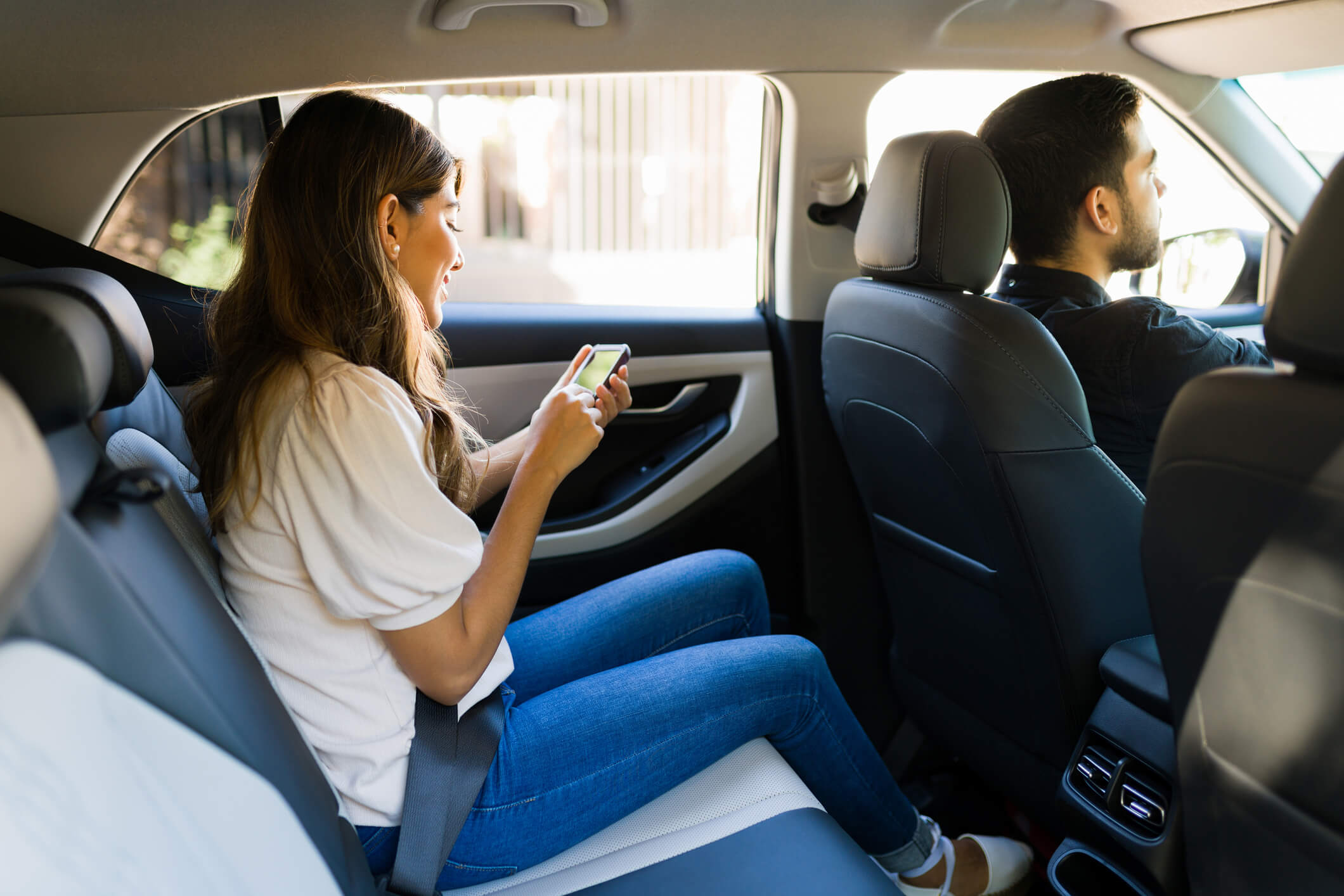
North Carolina Uber accident lawyer for a passenger riding in the back seat of a rideshare

A rideshare crash is a car accident with one extra question that decides everything: was the driver logged into the Uber or Lyft app, and had a ride been accepted? North Carolina answers that question by statute. Article 10A of Chapter 20, the Transportation Network Company law, sets a different insurance requirement for each stage of a driver’s shift, and the gap between a personal policy that may exclude app time and the $1,000,000 coverage required during a trip is often the difference between a claim that pays your medical bills and one that pays for your future.

Joshua E. Palmer, Attorney at Law concentrates in car, truck, and motorcycle accident claims and represents people hurt in Uber and Lyft crashes across North Carolina: passengers, drivers and pedestrians struck by a rideshare vehicle, and rideshare drivers themselves. Attorney Palmer earned his law degree at North Carolina Central University School of Law in Durham. This page explains who pays, how contributory negligence treats a passenger, what records the company must hand over, and the deadlines.

What Should I Do After An Uber Or Lyft Accident In North Carolina?

Call 911 and stay at the scene so an officer files the DMV-349 crash report; it records the vehicles, the point of impact, and every driver’s insurance. Get medical care the same day even if you feel shaken rather than hurt. Back-seat passengers absorb a collision without bracing for it, and injuries that seem minor at the scene often define the claim a week later.

Then preserve what only a rideshare passenger has. Screenshot the trip in the app before it disappears: the driver’s name and photo, the plate, the vehicle, the pickup and drop-off points, and the time the ride was accepted. The app must show you that information once a ride is accepted, and it proves which coverage applies. Report the crash through the app, but keep it to the facts; do not describe your injuries or accept blame in writing to the rideshare company or any insurer.

  • Call 911 and get the DMV-349 crash report number before you leave the scene.
  • Screenshot the trip, the driver, the plate, and the ride-acceptance time in the Uber or Lyft app.
  • See a doctor within 24 hours and follow every treatment recommendation.
  • Photograph the vehicles, your seat, and your injuries; collect the other driver’s and witnesses’ details.
  • Do not give a recorded statement to Uber’s, Lyft’s, or any driver’s insurer before talking to a lawyer.

Who Pays After A Rideshare Accident In North Carolina: Uber, Lyft, Or The Driver?

Under N.C. Gen. Stat. § 20-280.4, while a driver is logged on but has not accepted a ride, there must be primary liability coverage of at least $50,000 per person and $100,000 per accident for injuries and $25,000 for property damage, plus uninsured and underinsured motorist coverage. From the moment a ride request is accepted until the passenger has gotten out and unloaded, the statute’s definition of TNC service in N.C. Gen. Stat. § 20-280.1, the minimum jumps to $1,000,000 for injury, death, and property damage combined, again with uninsured and underinsured coverage.

Two features of the statute protect the injured. If the driver’s own insurance has lapsed or does not cover the loss, the rideshare company’s insurer must pay from the first dollar and defend the claim, and that coverage cannot be conditioned on a personal insurer first denying the claim. If instead another motorist hit the rideshare vehicle, that motorist’s liability policy pays first: at least $50,000 per person and $100,000 per accident on policies issued or renewed on or after July 1, 2025, under N.C. Gen. Stat. § 20-279.21, 30/60/25 on older policies, with the rideshare coverage’s own uninsured and underinsured motorist protection behind it.

Driver’s status at the crash Required liability coverage What it means for you
App off (personal driving) Driver’s own policy: 50/100/50 minimum on policies issued or renewed on or after July 1, 2025; 30/60/25 on older policies An ordinary car accident claim against the driver’s personal insurer
Logged on, no ride accepted $50,000 per person / $100,000 per accident bodily injury, $25,000 property damage, plus UM/UIM Rideshare coverage applies; the personal policy may exclude the loss
Ride accepted through drop-off (TNC service) $1,000,000 combined for injury, death, and property damage, plus UM/UIM The largest policy in the case; covers passengers and anyone the driver hits
Driver’s policy lapsed or excludes the loss Rideshare company’s insurer pays from the first dollar and defends the claim The statute requires it, not the company’s goodwill
North Carolina rideshare insurance by app status (N.C. Gen. Stat. § 20-280.4)

Figures are the statutory minimums. Exact log-on and ride-acceptance times decide which row applies.

Does Contributory Negligence Apply To A Rideshare Passenger In North Carolina?

North Carolina is one of only four states (plus Washington, D.C.) that still follow pure contributory negligence: if the injured person contributed to the crash in any degree, even 1%, they recover nothing. For a rideshare passenger that rule is almost never a problem, and it is worth saying plainly: a passenger in the back seat of an Uber or Lyft did not choose the speed, the lane, or the moment to pull out, and has no fault to contribute. Not wearing a seat belt cannot be used against you either; N.C. Gen. Stat. § 20-135.2A makes seat-belt evidence inadmissible.

The rule bites harder in two other situations. If you were driving, riding a motorcycle, or walking when a rideshare driver hit you, the driver’s insurer will look for any fault on your side, because under N.C. Gen. Stat. § 1-139 the defense must plead and prove it, and if they succeed the claim is gone. If you were the rideshare driver and another car hit you, that driver’s insurer does the same and may add that you were distracted by the app. North Carolina also recognizes exceptions, last clear chance and gross or willful and wanton conduct by the other driver, and the state Supreme Court’s 2025 decision in Moseley v. Hendricks shows how strictly the doctrine is otherwise applied.

Passenger rule of thumb: if you were a paying rider, assume you have a claim against at least one policy and let the insurers argue about which.

How Do I Get The Uber Or Lyft Records That Prove Which Coverage Applies?

The coverage tier turns on minutes, and North Carolina does not leave those minutes to the company’s discretion. After a crash the driver must tell the investigating officer and every directly interested party whether they were logged on or off, and in any claim the driver, the company, and every potentially liable insurer must exchange the precise log-on, log-off, and ride times for the twelve hours before and after the accident, together with each policy’s coverage, exclusions, and limits. The company must also keep the record of each ride for one year under N.C. Gen. Stat. § 20-280.5. A preservation letter goes out at the start of the case, and a slow company gets a subpoena.

The same records show whether the driver should have been on the platform at all. Rideshare companies must run criminal and driving-history checks and must disqualify drivers with recent major violations or impaired-driving convictions under N.C. Gen. Stat. § 20-280.6; a driver who should have failed that screen opens a separate claim against the company for its own carelessness.

Why Is A Claim Against Uber Or Lyft Different From A Claim Against An Employer?

When a delivery driver causes a crash on the job, the employer answers for the driver’s negligence. Rideshare companies are built to avoid that result, and North Carolina law helps them: N.C. Gen. Stat. § 20-280.8 creates a rebuttable presumption that a rideshare driver is an independent contractor rather than an employee. The presumption can be overcome, but a case that depends on holding Uber or Lyft responsible for the driver’s mistake is a harder, slower case than one that uses the coverage the statute already requires.

That is why the strategy in most North Carolina rideshare cases is to prove the driver’s negligence, establish the app status at the time of the crash, and recover from the $1,000,000 or 50/100/25 coverage that must be in place. Claims against the company itself are reserved for the facts that justify them: a driver the company should have disqualified, a known safety problem it ignored, or a defective app or vehicle.

How Long Do I Have To File A Rideshare Accident Claim In North Carolina?

Three years from the date of the crash for injury and property-damage claims under N.C. Gen. Stat. § 1-52(16). If a passenger, driver, or pedestrian died, the family’s wrongful death claim must be filed within two years of the date of death under N.C. Gen. Stat. § 1-53(4). The useful deadlines are shorter: ride records are kept for a year, cameras overwrite in days, and the vehicle is repaired or sold long before the statute runs.

Rule North Carolina law What it means for you
Injury lawsuit deadline 3 years — N.C. Gen. Stat. § 1-52(16) File within 3 years of the crash date
Wrongful death deadline 2 years — N.C. Gen. Stat. § 1-53(4) Runs from the date of death, not the crash
Rideshare trip records Kept 1 year — N.C. Gen. Stat. § 20-280.5 Send a preservation request at the start of the case
App-status disclosure Required after a crash and in any claim — N.C. Gen. Stat. § 20-280.4 Log-on and ride times decide which policy applies
Fault rule Pure contributory negligence Passengers rarely at fault; other drivers must keep fault on the other side
Key North Carolina rideshare accident deadlines and rules

Deadlines can differ for claims involving a government vehicle or a minor. Confirm your dates with a lawyer.

How Much Is A North Carolina Uber Or Lyft Accident Case Worth?

A North Carolina rideshare claim can recover every loss the crash caused: medical care, future treatment, lost wages and earning capacity, and pain and suffering. There is no cap on compensatory damages in an ordinary North Carolina injury case. Punitive damages are generally capped at the greater of three times compensatory damages or $250,000 under N.C. Gen. Stat. § 1D-25, and that cap does not protect an impaired driver.

What makes rideshare cases different is the coverage. A serious injury in an ordinary two-car crash is often limited by a $50,000 or $30,000 policy; the same injury as a rideshare passenger during a trip sits under $1,000,000 of required coverage plus uninsured and underinsured motorist protection. The value therefore turns on three things we establish early: the driver’s app status at impact, which locks in the policy; fault, which must rest entirely on the other side; and the full extent of your injuries, documented by your treating providers rather than guessed at in a first-week offer.

How Much Does A North Carolina Rideshare Accident Lawyer Cost?

Nothing up front. Joshua E. Palmer, Attorney at Law works on a contingency fee: the consultation is free, the firm advances the costs of the case, including records, preservation demands, and subpoenas for app data, and the fee is a percentage of what we recover. If we do not win, you owe no attorney’s fee.

Why Choose Joshua E. Palmer For Your North Carolina Uber Or Lyft Accident Case?

Attorney Joshua E. Palmer trained in North Carolina law at North Carolina Central University School of Law and has built a practice concentrated on car, truck, and motorcycle accident injuries and the insurance disputes that follow them. We identify every policy in play, secure the app data before it ages out, handle the medical bills and liens, and negotiate from the full value of the claim; when an insurer will not pay what a case is worth, we prepare it for court. Read how past clients’ cases resolved on our case results page (every case is different, and prior results do not guarantee a similar outcome) and see what clients say on our testimonials page.

  • Free consultation and case review by phone, video, or in person by appointment.
  • No fee unless we win; the firm advances the costs of your case.
  • Direct access to your attorney, not a call center.
  • Statewide representation for Uber and Lyft crashes anywhere in North Carolina.
Attorney Joshua E. Palmer
Your North Carolina Injury Attorney

Joshua E. Palmer

Managing Partner · Joshua E. Palmer, Attorney at Law

Attorney Palmer concentrates in personal injury law — car, truck, and motorcycle crashes, wrongful death, workplace injuries, and premises injuries — and personally handles the insurance fight that decides a North Carolina claim. He trained in North Carolina law at North Carolina Central University School of Law in Durham.

  • J.D., North Carolina Central University School of Law (Durham, NC)
  • Managing Partner, Joshua E. Palmer, Attorney at Law
  • Selected to Super Lawyers Rising Stars, 2026
Watch

Attorney Josh Palmer on North Carolina Rideshare Claims

A word from the attorney who will handle your North Carolina rideshare case.

More from the firm on YouTube.

In Short

Key Facts About North Carolina Rideshare Accident Claims

  • North Carolina requires $1,000,000 in liability coverage plus UM/UIM from the moment a rideshare driver accepts a ride until the passenger is unloaded (N.C. Gen. Stat. § 20-280.4).
  • Logged on with no ride accepted: $50,000 per person, $100,000 per accident, $25,000 property damage, plus UM/UIM; the driver’s personal policy may exclude app time.
  • A rideshare passenger almost never has fault to contribute, so North Carolina’s 1% contributory negligence rule rarely threatens a passenger’s claim.
  • After a crash the driver must disclose whether the app was on, and the company and every insurer must exchange exact log-on and ride times for the twelve hours around the crash.
  • You have 3 years to file an injury claim (N.C. Gen. Stat. § 1-52(16)) and 2 years for wrongful death, but ride records are only kept for one year.
  • Joshua E. Palmer, Attorney at Law handles North Carolina Uber and Lyft accident cases statewide with no fee unless we win.
Statewide

Where We Serve — North Carolina Uber And Lyft Accident Lawyers For Every Region

We represent injured passengers, drivers, and pedestrians across North Carolina, including:

Talk to a Lawyer

Get A Free Consultation With a North Carolina Rideshare Accident Lawyer

Hurt in an Uber or Lyft crash anywhere in North Carolina? Call for a free, no-obligation case review. We will explain which coverage applies, what your claim may be worth, and what to do next.

Call or Text Any Time
Free case review. No fee unless we win.

(478) 887-3734

Joshua E. Palmer, Attorney at Law
106 Moran Dr #5106, Bonaire, GA 31005

Map & Directions  ·  Contact Us Online

Responsible attorney: Joshua E. Palmer, Managing Partner · 106 Moran Dr #5106, Bonaire, GA 31005 · (478) 887-3734. Attorney advertising. This page is general legal information about North Carolina law, not legal advice for your situation; contacting the firm does not create an attorney-client relationship.

Common Questions

North Carolina Rideshare Accident Lawyer: Frequently Asked Questions

I was a passenger in an Uber that crashed in North Carolina. Who do I file a claim against?
Usually the rideshare coverage. From the moment your ride was accepted until you were unloaded, North Carolina requires $1,000,000 in liability coverage plus uninsured and underinsured motorist coverage under N.C. Gen. Stat. § 20-280.4. If another driver caused the crash, that driver’s liability policy pays first and the rideshare UM/UIM coverage fills the gap.
Does Uber or Lyft insurance cover me if the driver had not accepted a ride yet?
Yes, at a lower level. While a driver is logged on but between rides, North Carolina requires at least $50,000 per person and $100,000 per accident in liability coverage, $25,000 in property damage, and UM/UIM coverage. If the app was off, the crash is an ordinary claim against the driver’s personal policy.
Can the rideshare driver’s personal insurance deny my claim?
It can, and often will. North Carolina lets personal auto insurers exclude all coverage while a driver is logged on to a rideshare app. The statute answers that by requiring the rideshare company’s insurer to pay from the first dollar and defend the claim when the driver’s coverage has lapsed or does not apply.
Can I recover if I was partly at fault for a rideshare accident in North Carolina?
As a passenger the question almost never arises, because you had no control over the vehicle. If you were driving, riding, or walking when a rideshare driver hit you, North Carolina’s pure contributory negligence rule can bar recovery if the defense proves you contributed to the crash in any degree, subject to the last clear chance and gross negligence exceptions.
How do I prove whether the Uber or Lyft driver was on a trip when we crashed?
North Carolina law makes the proof available. After a crash the driver must disclose whether they were logged on, and in any claim the driver, the company, and every potentially liable insurer must exchange the exact log-on, log-off, and ride times for the twelve hours before and after the accident.
I drive for Uber or Lyft and another driver hit me. What coverage do I have?
The at-fault driver’s liability policy pays first. If that driver is uninsured or underinsured, the UM/UIM coverage required with the rideshare coverage applies while you were logged on or on a trip, which matters because your personal policy may exclude the shift.
How much does a North Carolina rideshare accident lawyer cost?
Joshua E. Palmer, Attorney at Law charges nothing up front. We work on a contingency fee, a percentage of the recovery, and you owe no attorney’s fee unless we win your case. The initial consultation is free.
Client Review

This Firm Goes Above and Beyond!

“After my accident, Josh came to my house and cared for me. He got my accident report and everything! I did not have to do anything but focus on getting better. I love you all!”

Client review, from our testimonials page. This testimonial reflects one client’s experience; each case is different and results vary.
Free Consultation

Hurt in an Uber or Lyft Crash in North Carolina? Let’s Talk.

One conversation can tell you which policy covers your crash and keep an insurer from using North Carolina’s 1% rule against you. Your consultation is free, and you pay nothing unless we win.

Serving All of North CarolinaNo Fee Unless We WinFree Case Review

Each case is different. Any results, settlement figures, or benefit amounts described on this page depend on the specific facts of that case and do not guarantee or predict a similar outcome in yours. Statutes and benefit rates cited are current as of November 2026; confirm current law with an attorney before relying on it.

📞 Get A Free Consultation · (478) 887-3734

Areas We Serve